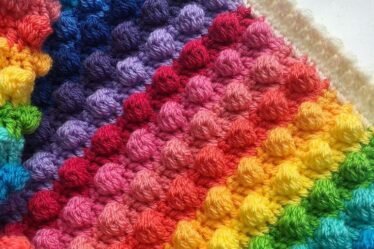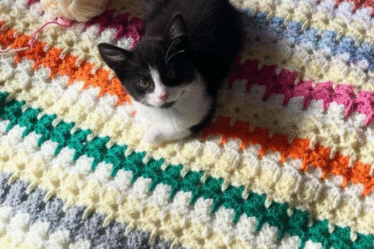
The Millstone Stitch is one of those crochet patterns that truly stands out. The combination of classic stitches with spike stitches creates a rich texture that looks intricate but becomes very rhythmic once you get into the flow. As a crocheter, I enjoy patterns like this because they keep the project interesting while still being relaxing to work on row by row.
This stitch is especially beautiful for blankets and afghans, where the repeating pattern creates a bold, structured design that feels both modern and timeless. In this article, I’ll guide you through the Millstone Stitch Crochet pattern, share helpful tips from experience, and present the instructions in a clear format suitable for readers of My Sweet Crochet.
What Is the Millstone Stitch?
The Millstone Stitch is a textured crochet pattern that uses a mix of single crochet (sc), half double crochet (hdc), double crochet (dc), and spike stitches. These stitches work together to create a repeating geometric texture that resembles stacked stones or layered ridges.
This stitch pattern is commonly used for:
- Blankets and afghans
- Throws
- Home décor projects
- Textured scarves
- Baby blankets
Because of its structured appearance and consistent rhythm, it’s a satisfying pattern for crocheters who enjoy visible texture in their finished pieces.
Skill Level
Intermediate
You should be comfortable with:
- Basic crochet stitches
- Counting stitch repeats
- Working spike stitches
- Maintaining consistent tension
Even though the stitch looks complex, the pattern becomes easy to follow after a few repeats.
Materials You’ll Need
Worsted weight yarn (Category 4)
Crochet hook size recommended for your yarn
Yarn needle
Scissors
Stitch markers (optional)
Measuring tape
Tip from experience: Choose yarn with good stitch definition so the spike stitches stand out clearly.
Finished Size
The pattern can be adjusted to different sizes, but the sample blanket typically measures:
Approximately 60 inches (152.5 cm) in length
You can easily customize the width by adding or subtracting stitch multiples.
Abbreviations (US Terms)
Approx = Approximately
Beg = Beginning
Ch = Chain(s)
Cont = Continue(ity)
Dc = Double crochet
Hdc = Half double crochet
Pat = Pattern
Rep = Repeat
RS = Right side
Sc = Single crochet
Spike St = Insert hook in row indicated and draw up a long loop
St(s) = Stitch(es)
Yoh = Yarn over hook
Gauge
- 8 sc and 9 rows = 4 inches (10 cm)
- 9 stitches and 9 rows = 4 inches (10 cm) in pattern
Checking your gauge helps ensure your finished blanket reaches the intended size.
Pattern Notes
- To maintain consistent color changes, join a new ball of yarn to match the last color change of the previous ball.
- This helps ensure the stripe repeat matches as closely as possible.
- Chain 3 at the beginning of a row counts as a double crochet.
- The pattern is worked in repeating rows.
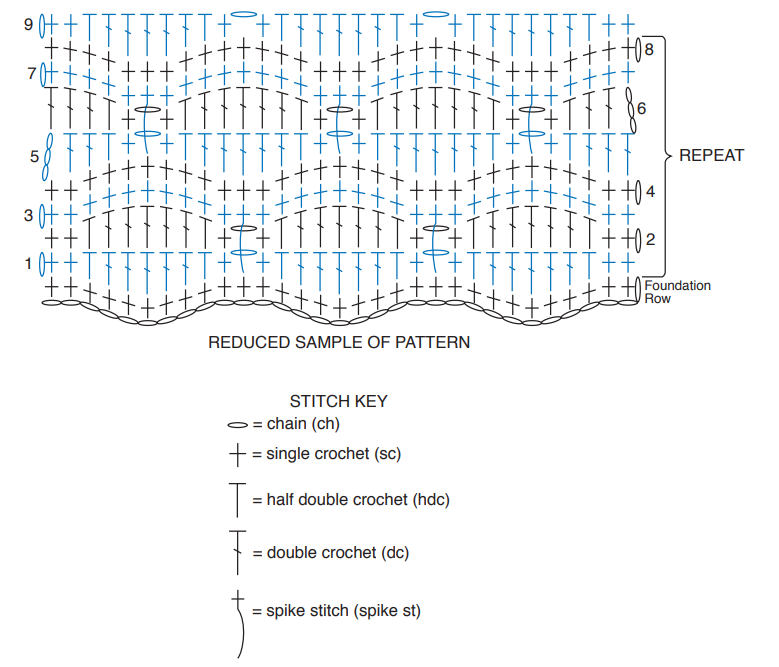
Millstone Stitch Crochet Instructions
Foundation Chain:
Chain 112 stitches
(Multiple of 10 chains + 2)
Foundation Row (Right Side)
1 single crochet in the second chain from the hook.
1 single crochet in each chain to the end of the chain.
Turn.
111 single crochet
Rows 1 and 2
Chain 1.
1 single crochet in the first stitch.
1 single crochet in next stitch.
1 half double crochet in next stitch.
1 double crochet in each of next 5 stitches.
1 half double crochet in next stitch.
1 single crochet in next stitch.
Chain 1.
Skip next stitch.
Repeat from * 9 times more, then repeat from * once more.
1 single crochet in last stitch.
Turn.
Row 3
Chain 1.
1 single crochet in each of the first 10 stitches.
Spike stitch in next single crochet 3 rows below.
1 single crochet in each of next 9 stitches.
Repeat from * to last stitch.
1 single crochet in last stitch.
Turn.
Row 4
Chain 1.
1 single crochet in each stitch across.
Turn.
Rows 5 and 6
Chain 3.
1 double crochet in each of next 2 stitches.
1 half double crochet in next stitch.
1 single crochet in next stitch.
Chain 1.
Skip next stitch.
1 single crochet in next stitch.
1 half double crochet in next stitch.
1 double crochet in each of next 5 stitches.
Repeat from * 9 times more, then repeat from * once more.
1 double crochet in each of next 3 stitches.
Turn.
Row 7
Chain 1.
1 single crochet in each of first 5 stitches.
Spike stitch in next single crochet 3 rows below.
1 single crochet in each of next 9 stitches.
Repeat from * 9 times more, then repeat from * once more.
1 single crochet in each of next 5 stitches.
Turn.
Row 8
Repeat Row 4.
Pattern Repeat
The last 8 rows form the pattern.
Continue repeating these rows until the work from the beginning measures:
Approximately 60 inches (152.5 cm)
End on a Row 4 or Row 8.
Fasten off.
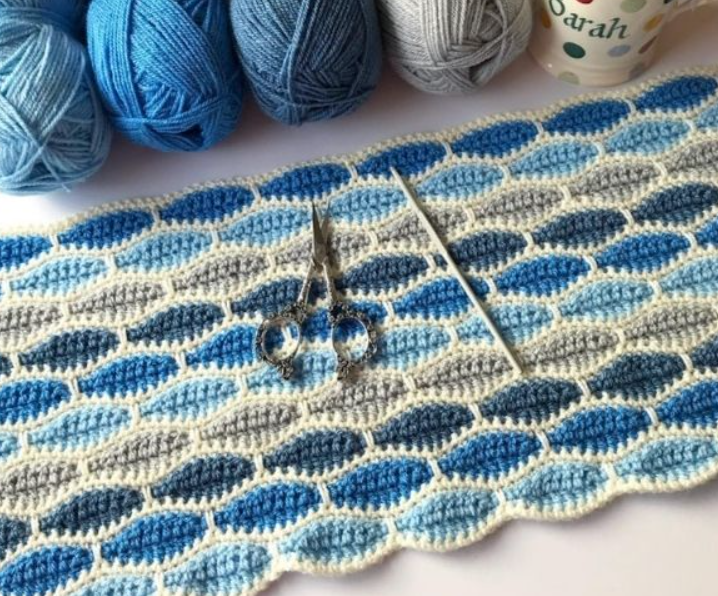
Color Ideas for a Millstone Stitch Blanket
This stitch looks beautiful in many color combinations. Here are a few ideas:
- Soft gray and cream
- Navy and white
- Earth tones (beige, brown, olive)
- Pastel stripes for baby blankets
- Bold modern colors
- Neutral tones for home décor
Striped yarn works especially well with this textured pattern.
Why Crocheters Love the Millstone Stitch
The Millstone Stitch remains a favorite because it offers:
- Beautiful texture
- Structured pattern repeat
- Visual interest
- Durable fabric
- A relaxing rhythm once established
It’s the kind of project that feels satisfying to work on and impressive to display.
The Millstone Stitch Crochet pattern is a wonderful choice for crocheters who enjoy texture and repetition in their projects. While it may look complex at first glance, the pattern becomes very manageable after a few repeats, making it both engaging and enjoyable to crochet.
For readers of My Sweet Crochet, this stitch offers a great opportunity to build confidence, explore new techniques like spike stitches, and create a cozy handmade blanket that can be treasured for years to come.